
Federal Judge in Washington, D.C. Dismisses Environmental Complaint to Federal Aviation Administration (FAA) Over SpaceX launches in Starbase.
Federal judge dismisses environmental lawsuit against FAA over SpaceX Starship launches at Boca Chica, ruling the agency's environmental assessment fell within "a broad zone of reasonableness" despite concerns over endangered species and habitat damage.


MCALLEN, Texas — A federal judge in Washington, D.C. has dismissed a lawsuit claiming the Federal Aviation Administration failed to properly assess the environmental impacts of SpaceX’s Starship launch program in South Texas.
The suit, filed in May 2023 by the Center for Biological Diversity, the American Bird Conservancy, the Surfrider Foundation, Save RGV, and the Carrizo/Comecrudo Tribe of Texas, targeted the FAA’s approval of SpaceX launches at Boca Chica, now the site of Starbase. The case stemmed from the explosive April 20, 2023, test flight of Starship, which scattered concrete debris, particulate matter, and wastewater over protected habitats, prompting the FAA to impose temporary launch pauses and additional mitigation requirements like enhanced wildlife monitoring.
The plaintiffs argued the agency should have prepared a full environmental impact statement rather than relying on a Programmatic Environmental Assessment (PEA), which noted significant environmental effects but included mitigation plans. The groups contended that the PEA inadequately addressed risks to endangered species like the piping plover, northern aplomado falcon, ocelot, and Kemp's ridley sea turtle, as well as cultural disruptions to Indigenous practices due to frequent beach and road closures—concerns that have intensified with over 10 successful Starship test flights by November 2025, including orbital insertions and booster catches.
“This is a disappointing decision for the wildlife of Boca Chica who have been devastated by SpaceX’s activities and the FAA’s failure to protect them,” said Jared Margolis, a senior attorney at the Center for Biological Diversity. “Exploding rockets will keep raining down on the imperiled wildlife and the places they live as long as the government keeps giving SpaceX a blank check to trash this irreplaceable corner of Texas.” As of November 2025, the plaintiffs have signaled intent to appeal the ruling to the U.S. Court of Appeals for the D.C. Circuit, citing ongoing incidents like sonic booms damaging refuge structures and debris fallout during Flight 10 in August 2025.
U.S. District Judge for the District of Columbia Carl J. Nichols found no evidence that the FAA failed to independently evaluate the PEA or simply accepted SpaceX’s findings at face value. A Trump appointee, Nichols emphasized deference to agency expertise under the National Environmental Policy Act (NEPA), particularly after recent Supreme Court decisions limiting judicial second-guessing of regulatory processes.
“Most of the (assessment’s) conclusions were well-reasoned and supported by the record,” Nichols wrote in his Sept 15, 2025 opinion.
He noted that, under recent Supreme Court guidance, courts are cautioned against micromanaging federal agencies when decisions fall “within a broad zone of reasonableness.”
“While parts of its analysis left something to be desired, even those parts fell 'within a broad zone of reasonableness,’” Nichols added.
The lawsuit centered on concerns about heat, noise, light, and debris from the rocket launches, which environmental groups said affected nearby habitats including the Boca Chica Wildlife Refuge and Boca Chica State Park. By late 2025, SpaceX's operations have expanded under a May 2025 FAA license modification, allowing up to 25 launches annually—up from five in 2022—with ongoing monitoring required for fire risks, wastewater discharge, and habitat disturbance, though critics argue these measures remain insufficient amid plans for 300+ launches per year by the 2030s.
The FAA had approved SpaceX’s license after reviewing the PEA. The dismissal bolsters SpaceX's momentum toward Artemis program contributions and Mars missions, but it has fueled broader debates over balancing commercial spaceflight with environmental safeguards in sensitive ecosystems.
Tyler Welti of Relman Colfax PLLC, along with in-house counsel for SpaceX (Space Exploration Technologies Corp.), represented the company as an intervenor-defendant in the federal lawsuit Center for Biological Diversity et al. v. Federal Aviation Administration et al. (Case No. 1:23-cv-01204, U.S. District Court for the District of Columbia). SpaceX intervened in May 2023 to defend its Starship launch license against the environmental groups' claims that the FAA's Programmatic Environmental Assessment was insufficient under NEPA, filing motions including a cross-motion for partial summary judgment that contributed to the case's dismissal on September 15, 2025.
About Starbase Observer Editorial Staff
Editorial staff at Starbase Observer. For more coverage of Starbase, Texas, follow @StarbaseObserver on YouTube, Instagram, Facebook, TikTok, and on X at @Starbase_News. STELLAR JOURNALISM.™
Related Articles
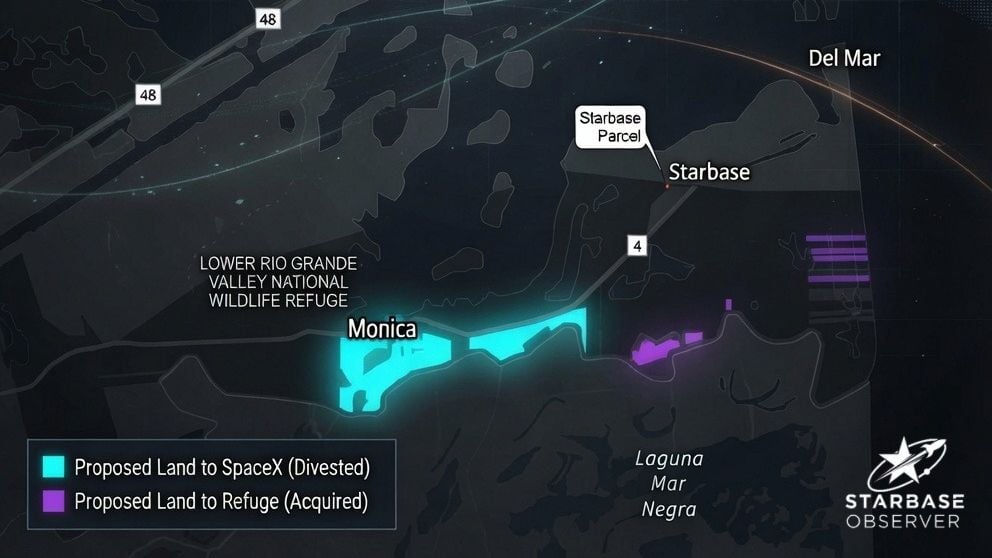
Environmental Groups Sue to Block SpaceX Boca Chica Land Exchange with U.S. Fish and Wildlife Service
The U.S. Fish and Wildlife Service concluded in a 223-page assessment that the federal government's June land exchange with SpaceX may actually benefit the National Wildlife Refuge system. Out-of-state environmental activists and some local groups aren’t convinced.
Read Article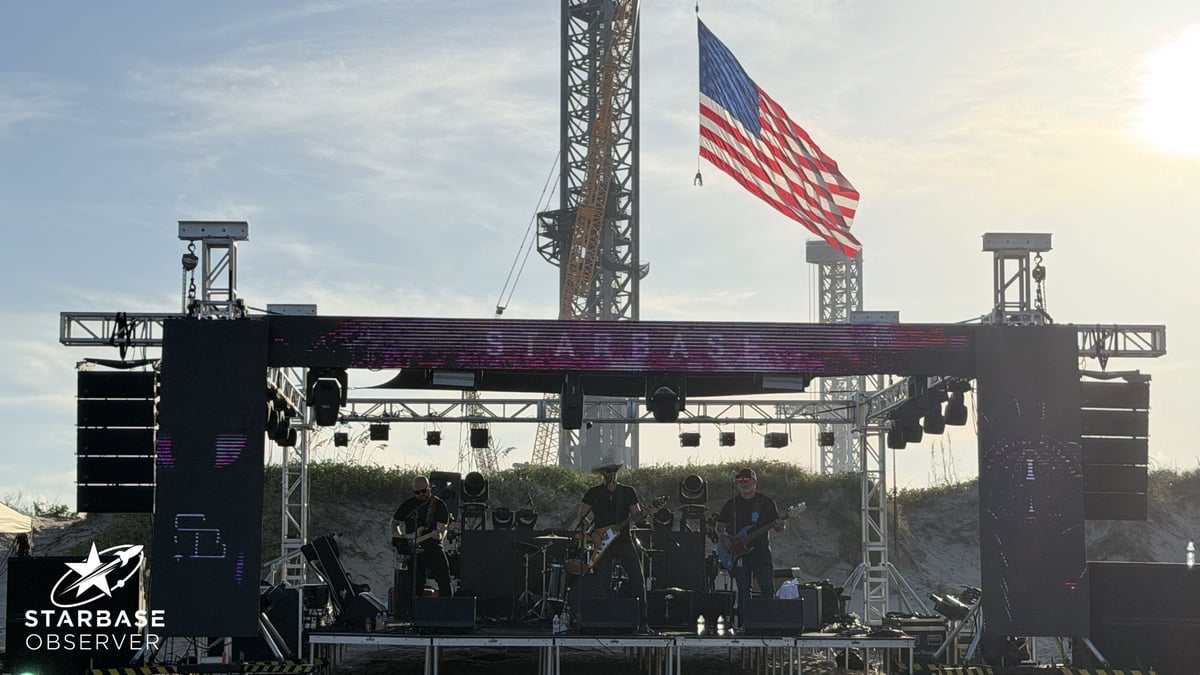
Pristine Sands, Stars & Stripes: Starbase’s Second Annual Fourth of July Lights Up Boca Chica Beach
The City of Starbase hosted its Second Annual Fourth of July Celebration on the clean, pristine sands of Boca Chica Beach, drawing community members, SpaceX employees, and visitors for an evening of patriotism, live music, and fireworks.
Read Article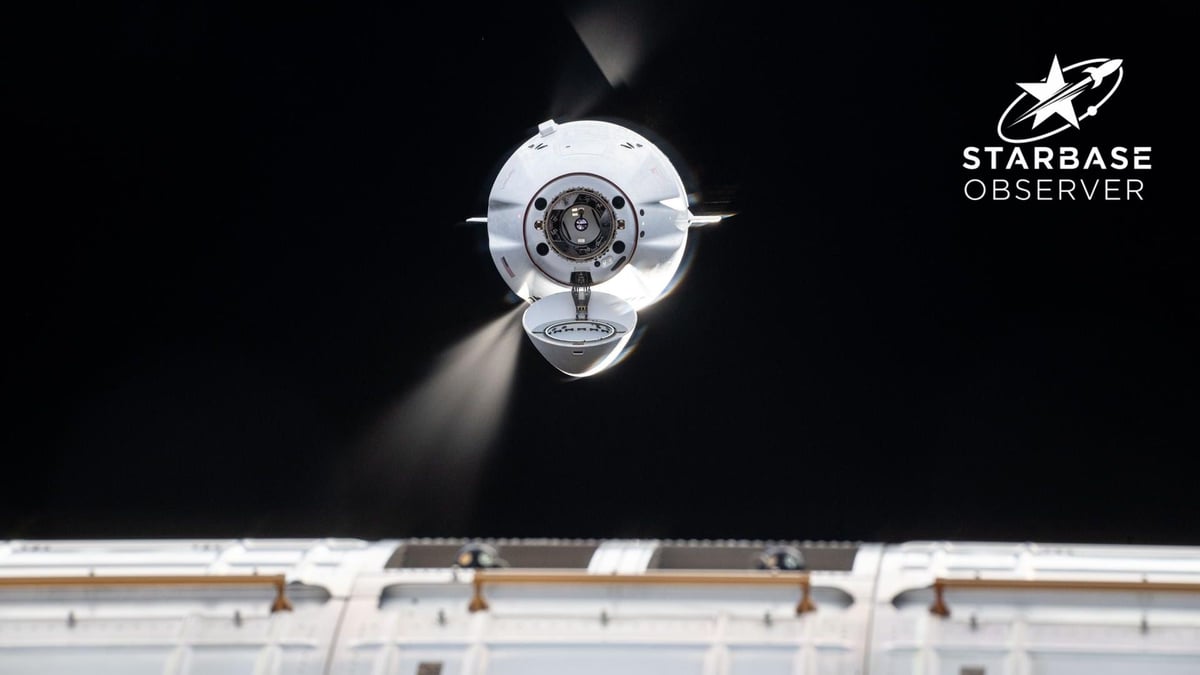
SpaceX Dragon Successfully Docks to ISS, Delivering Critical Science and Supplies for Expedition 74
SpaceX’s CRS-34 Dragon has successfully docked to the ISS on May 17, 2026, delivering nearly 6,500 pounds of science experiments and supplies to the Expedition 74 crew.
Read Article